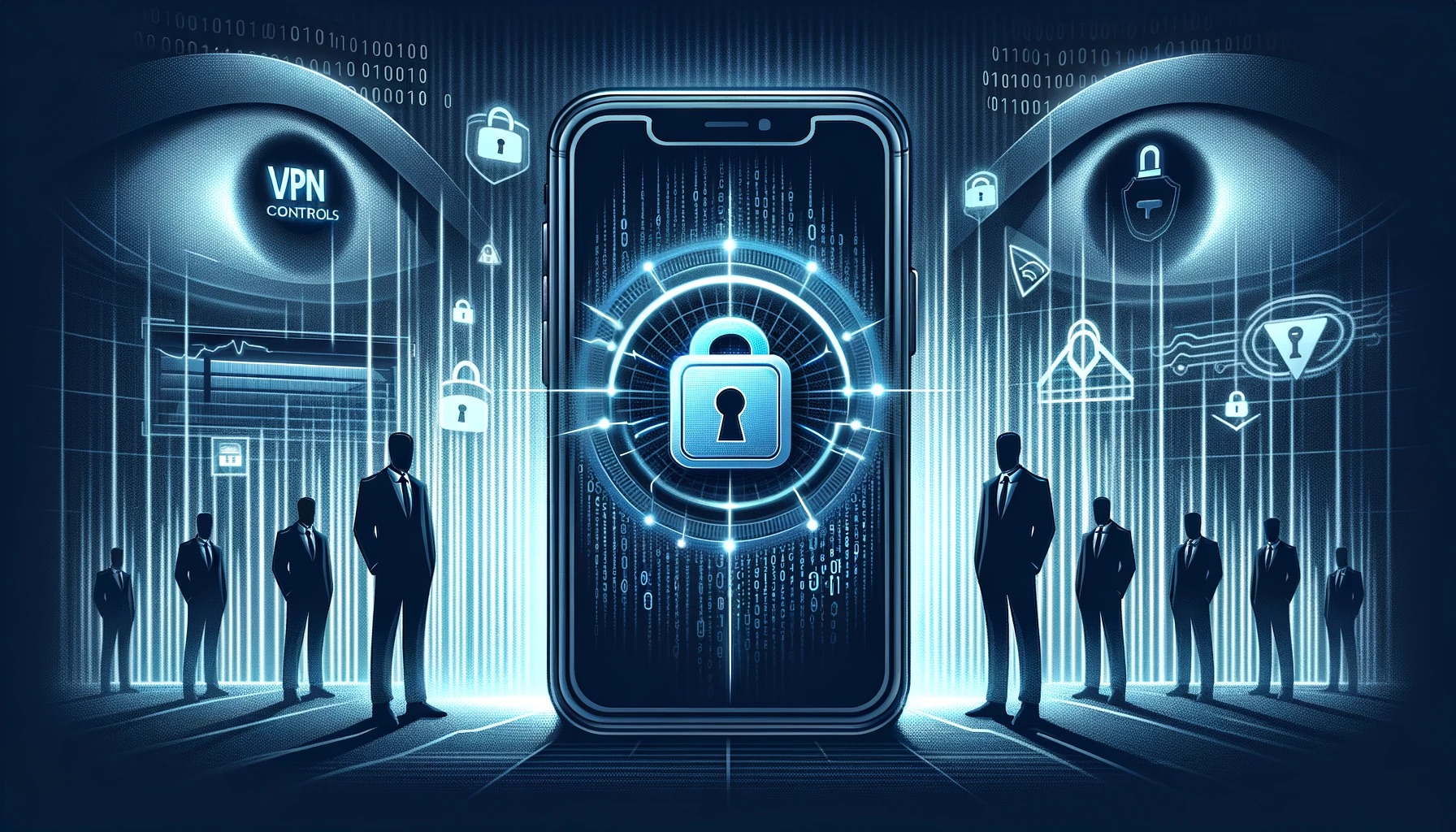
Theoretical Risks of VPN Bypass by Smartphone Manufacturers
In the modern digital age, concerns about mobile privacy and data security are at the forefront of consumer technology discussions, particularly regarding the devices and software we use daily.
One of the more alarming possibilities is that major smartphone manufacturers like Apple and Google could theoretically bypass virtual private network (VPN) controls to surveil and collect user data without their consent.
Unique identifiers like Apple ID and Google ID, when combined with a mobile phone’s IMSI (International Mobile Subscriber Identity) or IMEI (International Mobile Equipment Identity), create a powerful tool for tracking and documenting user activity across multiple platforms and services.
The Apple ID and Google ID are linked to user accounts that store personal preferences, app data, and various settings. When these account identifiers are cross-referenced with the IMSI or IMEI—which are unique to each mobile device and SIM card—organizations can compile a comprehensive profile of user activities.
This combination allows for precise device usage tracking, app downloads, online purchases, and even location history. Essentially, these identifiers work together to create a unique digital fingerprint for each user, making it possible to accurately monitor individual behavior patterns, attribute actions directly to a specific individual, and deliver personalized user experiences or targeted advertisements. This capability raises significant privacy concerns as it can be used to surveil users without explicit consent.
This article delves into the technical potential for such activities, focusing on the closed nature of these systems and why this makes the concern both plausible and troubling.
Read my latest articles on my website at https://timlayton.cloud/
I share weekly insights on quantifying cyber risk in dollars, not colors — including Monte Carlo simulation, loss exceedance modeling, Cyber Value at Risk (VaR), and NIST CSF quantification. If you’re an executive, CISO, or security leader looking for practical, data-driven approaches to cyber risk, let’s connect on LinkedIn.
Understanding the Technical Landscape
Baseband Processor and Its Role:
The baseband processor in smartphones is the component that manages all communication functions with cellular networks, including voice, text, and data transmission. It operates independently from the device’s main operating system—iOS on Apple devices and Android on Google devices—on its own dedicated hardware and firmware. This separation is crucial because it means that the baseband processor can potentially act without the main operating system’s knowledge or control.
VPN Functionality and Integration:
VPNs encrypt the data leaving a device, making it difficult for external parties (like ISPs or malicious actors) to spy on internet traffic. Typically, a VPN integrates with the device’s operating system to route all outgoing and incoming internet traffic through a secure server. This system should encapsulate all data packets within the device, regardless of origin, ensuring comprehensive protection.
Theoretical Bypass Scenarios
Direct Baseband Communication:
One potential method for bypassing a VPN is direct communication from the baseband processor to the network, sidestepping the main operating system where the VPN operates. If a smartphone manufacturer programs the baseband processor to send specific data directly to its servers or to third parties, this data transfer could theoretically occur outside the VPN’s encrypted tunnel without the users’ knowledge or consent.
Secondary Network Interfaces:
Another possibility involves using secondary network interfaces that are not covered by the VPN configuration set up by the user. This could include specialized diagnostic or management interfaces that communicate using different protocols or network paths not typically monitored or controlled by user-installed applications.
Closed Systems and Lack of Transparency
Closed Source Nature:
Both Apple’s iOS and Google’s Android (despite being based on the Linux kernel) contain significant proprietary elements, particularly in hardware drivers and system-level applications. This closed-source nature means that independent security researchers cannot fully audit what the device’s software and firmware are programmed to do.
Potential for Hidden Functionality:
Without the ability to review the code, there remains a theoretical risk that devices could contain hidden functionalities not disclosed to users. This might include backdoors, data exfiltration mechanisms, or other surveillance capabilities intentionally designed to bypass security features like VPNs.
Historical Precedents of Data Breaches:
Both Google and Apple have experienced significant data breaches, underscoring tech giants’ vulnerability to security lapses that have already exposed user data. These incidents highlight that the average person has limited visibility into what these corporations are truly doing with their sensitive data and telemetry, raising concerns about how securely it is handled behind the closed doors of proprietary systems.
Use Case: VPN Bypass by a Smartphone Manufacturer
Scenario Description:
- A user has a smartphone with the latest version of its operating system and uses a reputable VPN service for all internet communications.
- Unbeknownst to the user, the manufacturer has included functionality in the baseband processor firmware that transmits telemetry data, including location, device identifiers, and network usage details, directly to its servers without routing this data through the VPN.
Steps in the Bypass Process:
Data Collection: The baseband processor collects data desired by the manufacturer.
Transmission: Utilizing a proprietary protocol, the baseband processor sends this data through a cellular network, bypassing the standard OS network stack where the VPN operates.
Reception and Analysis: The manufacturer receives this data and analyzes it for product improvement, targeted advertising, or other purposes. Manufacturers could send the information and data to three-letter agencies on more nefarious levels.
Conclusion: Navigating Privacy in a Closed Ecosystem
The possibility that smartphone manufacturers could bypass VPNs and other security controls is a serious concern, compounded by the opacity of closed systems.
While no concrete evidence exists that such activities are occurring, the theoretical potential alone should prompt a call for greater transparency and regulation in the tech industry. One must assume that if it is possible, it is likely being acted upon to some degree, which is a complete violation and illegal.
Until tech giants like Apple and Google provide such assurances, users must remain vigilant, advocate for open systems, and support legal standards that protect privacy in the digital realm. In the meantime, while Apple and Google continue to operate closed systems, it is safe to assume the worst and operate accordingly.
The Snowden incident, revealed in 2013 by former NSA contractor Edward Snowden, exposed the extensive and intricate global surveillance programs conducted by the United States National Security Agency (NSA) and its international partners.
This groundbreaking disclosure highlighted how deeply entrenched surveillance mechanisms had become, with the NSA having access to vast amounts of digital communications, phone records, and online activities.
Snowden’s leaks demonstrated that the NSA, through programs such as PRISM, was capable of accessing data directly from the servers of major tech companies, including mobile phone communications and internet usage data.
The revelation brought to light the scope of mass surveillance, showing that virtually every mobile phone user could be monitored, their activities logged, and their personal information potentially analyzed without their knowledge or consent.
This incident sparked global debates over privacy and security and prompted calls for more stringent safeguards against the unchecked surveillance of citizens worldwide. Given that the Snowden incident occurred over ten years ago, it would be foolish not to assume that the capabilities of these types of surveillance agencies have significantly improved since then.
I share weekly insights on quantifying cyber risk in dollars, not colors — including Monte Carlo simulation, loss exceedance modeling, Cyber Value at Risk (VaR), and NIST CSF quantification. If you’re an executive, CISO, or security leader looking for practical, data-driven approaches to cyber risk, let’s connect on LinkedIn.
